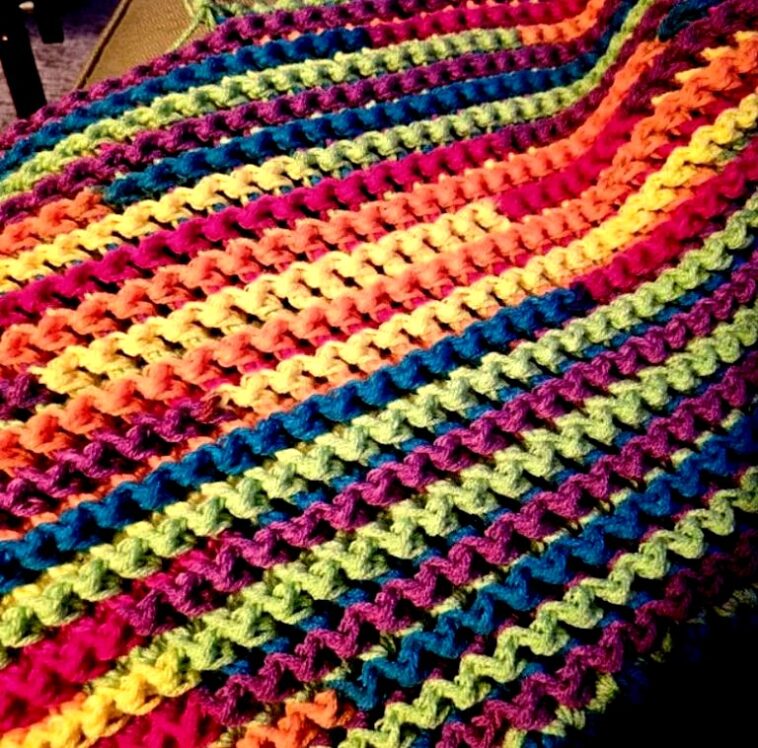
The ZigZag Waffle Stitch is a textured crochet stitch pattern that creates a zigzag or chevron-like effect. It is typically used for blankets, scarves, and other projects where you want a unique, bumpy texture. The stitch mimics the pattern of a waffle but with a zigzag shape.
Here’s a basic guide to help you crochet the ZigZag Waffle Stitch:
Materials:
- Yarn of your choice (worsted weight is commonly used)
- Crochet hook (size recommended for your yarn)
Abbreviations:
- ch = chain
- sc = single crochet
- dc = double crochet
- sk = skip
- st = stitch
Instructions:
-
Foundation Row: Start by making a foundation chain in a multiple of 6 stitches plus 2 (e.g., 18 + 2 = 20 chains). The total number of chains will depend on the size of your project.
-
Row 1:
- Skip the first chain and make a single crochet (sc) in the next chain.
- Chain 2, then skip 2 stitches, and make a double crochet (dc) in the next stitch.
- Chain 2, skip 2 stitches, and make a single crochet (sc) in the next stitch.
- Repeat this pattern across the row.
-
Row 2:
- Turn your work.
- Chain 2 to begin the row.
- Repeat the pattern by making a sc, chain 2, sk 2, dc, chain 2, sk 2, sc, across the row until the end.
-
Continue:
- Keep repeating Row 2 for the desired length of your project.
Tips:
- Make sure your foundation chain is long enough to cover the width you want for your project.
- You can adjust the size of the “zigzag” by experimenting with the number of stitches between the sc and DC.
This stitch creates a lovely, textured fabric that is both visually interesting and functional for many types of crochet projects!
ZigZag Waffle Stitch – VISUAL GUIDE
At the heart of our commitment to offering diverse learning avenues, we strive to ease the journey of our readers. To further assist in your crafting adventure, we present this insightful video tutorial, guiding you through the process of mastering the exquisite ZigZag Waffle Stitch. By immersing yourself in the visual presentation, you will find it easier to absorb the technique, observe subtle nuances in execution, and perhaps discover some new tricks along the way. This tutorial is brought to you by Naztazia’s YouTube channel, and you can view it right below: